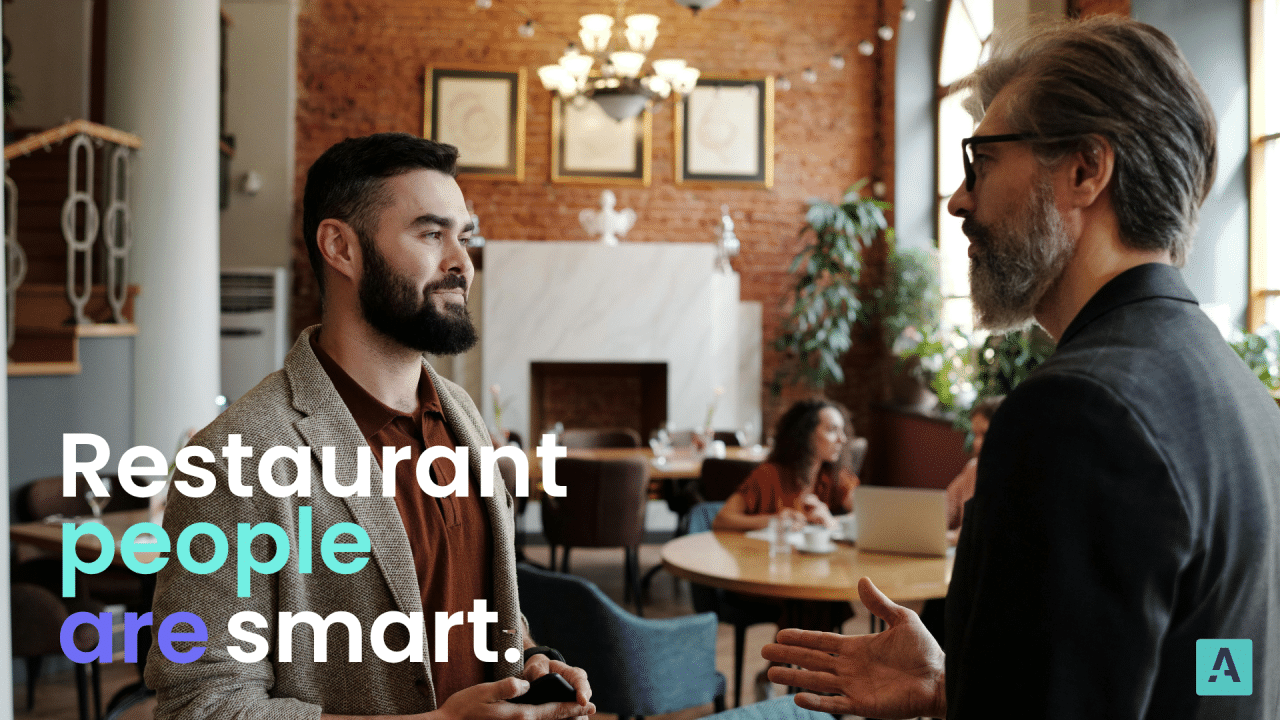
People underestimate restaurant people all the time.
It happens in lease negotiations. Vendor meetings. Technology demos. Investor conversations. Contract negotiations.
There is often this quiet assumption sitting in the room that restaurant operators are somehow less sophisticated than people in other industries.
That has never made sense to me.
Restaurants are one of the hardest businesses in the world to run.
Restaurants combine constant operational pressure with perishable inventory, staffing instability, unpredictable demand, equipment failures, health and safety standards, shifting schedules, and real-time guest expectations — all inside an environment where everything is happening simultaneously.
Most businesses deal with one or two of those things.
Restaurants deal with all of them every single day.
After working across multiple industries over the years — restaurants, retail, logistics, manufacturing, staffing, software, events, and construction — one thing became very clear to me:
Restaurants combine the hardest parts of almost every business model into one operating environment.
And the people who survive in that environment are usually far more capable than they get credit for.
The Real Problem
Restaurant people are not just “street smart.”
They are smart.
They solve problems quickly. They adapt constantly. They make decisions under pressure. They manage chaos in real time while balancing customer experience, labor, operations, and team dynamics all at once.
That takes intelligence.
Not theoretical intelligence.
Operational intelligence.
Emotional intelligence.
Creative intelligence.
The best restaurant operators learn how to read situations fast. They understand patterns. They know how to respond when things do not go according to plan, which in hospitality happens constantly.
That is why I have always found it strange that so much restaurant technology has been designed around the assumption that operators need everything simplified and controlled.
For years, the messaging in restaurant tech has sounded something like this:
“Make it dummy proof.”
“Make it so simple anyone can do it.”
“Remove all decision-making.”
There is a good intention inside some of that thinking.
Technology absolutely should be easy to use.
If a manager already understands how to write a schedule, a new scheduling platform should not require weeks of retraining just to perform the same task differently. Good technology should reduce friction immediately.
But there is a big difference between making software easier and assuming the people using it are incapable of thinking.
A lot of restaurant technology has been built around control instead of development.
There is a difference between creating systems and controlling people.
Restaurants absolutely need systems. This is how the dish is plated, how guests are greeted, how side work is completed, how the dining room flows, etc…
Those are operational control points. They create consistency and help teams execute together.
But restaurants are not factories running on fixed conditions.
Hospitality is dynamic.
Managers are constantly balancing variables that cannot fully be predicted or controlled. Sales forecasts change, weather changes, call-outs happen, equipment breaks, large parties arrive unexpectedly, team morale shifts, guest behavior changes, and service flow changes. The best operators know how to adjust in real time.
A rule can help guide those decisions.
But rules cannot think.
And when systems try to remove all human judgment, they also remove ownership, engagement, and development.
That approach works well with machines.
It wastes the biggest advantage restaurants actually have: capable people.
What’s Changing
Years ago, I wanted to better understand how financially capable restaurant operators really were.
So I hired a recruiter and interviewed 100 qualified restaurant professionals.
We gave them a financial literacy assessment focused on two things:
Scheduling strategy and inventory management.
Not just writing a schedule mechanically, but understanding the thought process behind building a good labor plan.
Not just counting inventory, but understanding the relationship between expectations and operational reality.
The results surprised us.
Ninety-five percent failed the inventory section.
Ninety-one percent failed the scheduling section.
A lot of people would look at those results and conclude that restaurant operators lacked financial capability.
I did not see it that way.
What I saw was that the industry had become heavily focused on training people to follow rules, but had invested far less into developing people to think critically about operations.
There is a major difference between training and development.
Training teaches people how to follow procedures.
Development teaches people how to think.
Restaurants have historically done a decent job teaching process compliance:
If this happens, do this.
Follow this checklist.
Complete this task.
Execute this standard.
That matters.
But hospitality is too dynamic for rule-following alone to produce great outcomes consistently.
The best operators are thinking constantly.
Anyone who has watched a strong expo manage a slammed brunch service already understands this.
That is not low-skill work. That is advanced operational decision-making under pressure.
So instead of concluding that restaurant people lacked capability, I saw an opportunity to help develop operational thinking.
That idea became one of the original foundations behind Axial Shift.
When we first launched the platform, it was invite-only.
We onboarded one brand at a time because we wanted to study how people actually worked.
At one point, 76% of entire organizations were actively using the platform, from dishwashers all the way to CEOs.
I spent a huge amount of time inside restaurants watching how managers operated.
What became obvious very quickly was that managers were losing massive amounts of productive energy running between disconnected systems and solving predictable operational problems.
Their day was fragmented.
Leadership was fragmented.
Service was fragmented.
Instead of spending time coaching teams, improving operations, and supporting guests, managers were buried in administrative tasks and communication gaps.
That is not an intelligence problem.
It is a context problem.
What Actually Works
What we discovered is that people improve very quickly when they are given relevant information in the right context.
Not overwhelming dashboards.
Not endless reports.
Not disconnected data.
Context.
Relevant information delivered at the right time in a way that helps people understand what is happening operationally.
Once that happens, development starts occurring naturally.
Restaurant operators are highly adaptive learners.
Most already understand the operational environment deeply because they live inside it every day.
The missing piece is often visibility and context.
When managers are given information in context, they are able to rapidly connect operational feedback to what they are seeing on the floor. Over time, that strengthens their understanding of what success actually feels like operationally.
That is why the future of restaurant technology is not about replacing people.
It is about strengthening people.
The goal should not be removing all decision-making from operators.
The goal should be helping operators make better decisions faster and with greater confidence.
What To Do Now
The restaurant industry does not need to dumb things down for restaurant people.
It needs to remove noise, fragmentation, and unnecessary operational friction.
The opportunity is not more control.
It is better context.
Not replacing judgment.
Improving judgment.
Not treating operators like problems to manage.
Treating them like capable people to develop.
AI is already accelerating this shift.
At its core, AI is pattern recognition operating within context.
Great restaurant operators work the exact same way.
They recognize patterns.
They adapt.
They respond.
They learn.
The future belongs to restaurant brands that understand this.
Because restaurant people are not the weak point in the business.
They are the competitive advantage.
Give your operators the context to lead with confidence
Axial Shift helps restaurant brands reduce operational noise, connect fragmented systems, and put the right information in front of the people closest to the guest experience. Book a demo to see how better context can help your managers make smarter decisions faster—and turn your people into an even stronger competitive advantage.